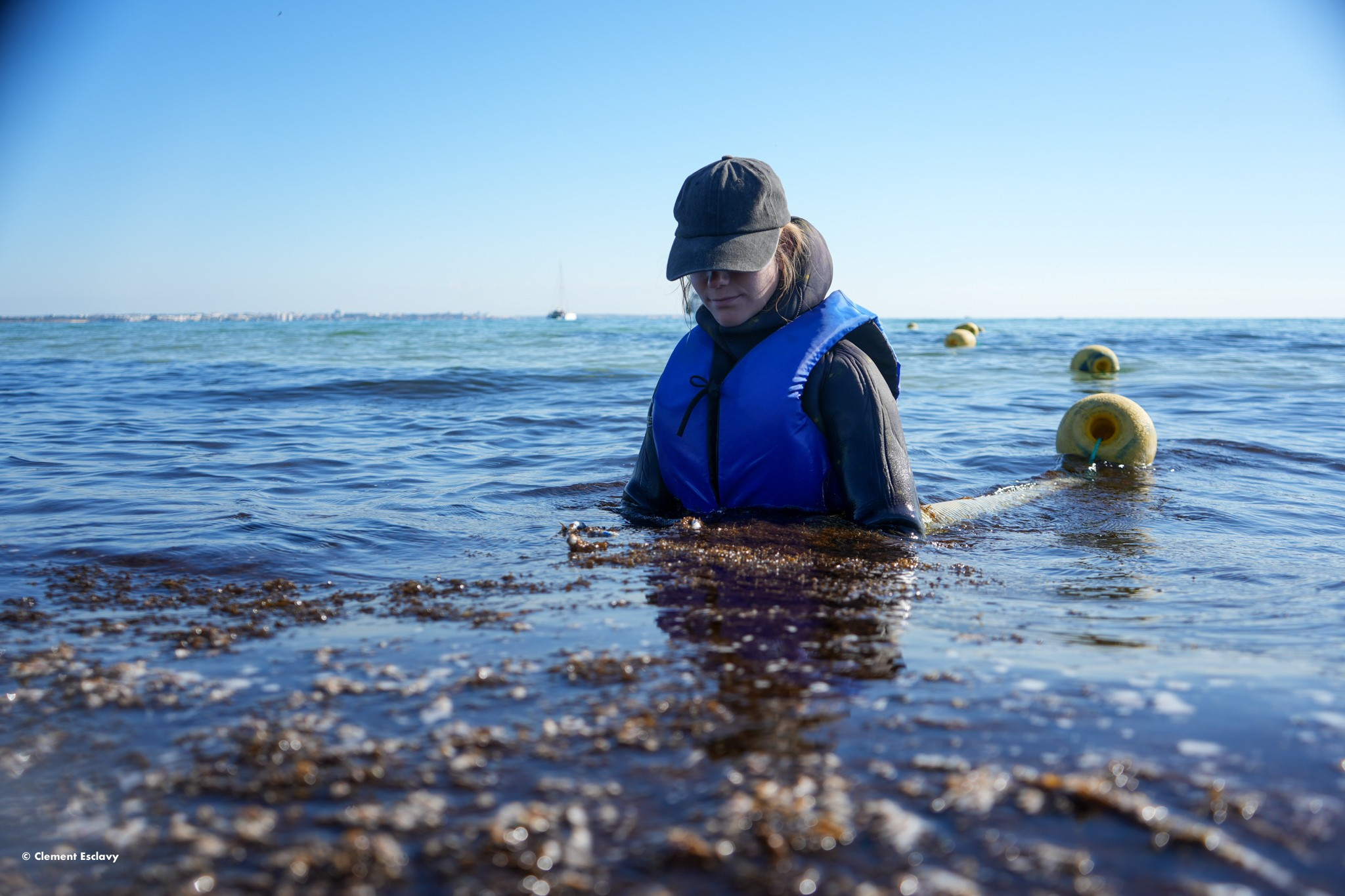
Easy Harvest develops in-water harvesting systems with a goal to extract large amounts of biomass fast while streamlining logistics and offering alternatives to conventional heavy machinery.
Our harvesting system enables the collection of seaweed directly from the water column before stranding events occur, ensuring minimal sand bycatch and a high-quality fresh biomass. The selective, non-invasive approach respects the local biodiversity.
A Smarter Way to Harvest
Mechanical beach cleaning often compacts sand, disturbs dune vegetation, and accelerates coastal erosion by removing sediment along with seaweed.
Our selective in-water harvesting method prevents these impacts by collecting seaweed before it strands, maintaining natural beach dynamics.
The Rising Tide of Seaweed Blooms
Around the world, unprecedented seaweed blooms are sounding an ecological alarm. Driven by human activity and climate change, these accumulations are growing in unnatural volumes, overwhelming coastlines, fisheries, and tourism.
Some species are aggressively invasive, disrupting marine ecosystems and diminishing biodiversity. The urgency is clear — we must rethink how we manage and utilize these blooms, transforming them from an environmental burden into a sustainable opportunity.
Rugulopteryx Okamurae
A Challenge and an Opportunity
Rugulopteryx okamurae, an invasive brown macroalgae native to the northwest Pacific, has established dense populations across southern European coastal waters, particularly in the western Mediterranean and along the Atlantic coast. Its rapid proliferation forms extensive mats that displace native species, alter benthic communities, and disrupt trophic interactions. The accumulation of thousands of tonnes of stranded biomass each year creates significant management and disposal challenges, with cascading effects on fisheries, tourism, and local economies.
However,
this biomass represents a promising resource. With its high content of valuable compounds, R. okamurae offers potential for innovative and sustainable valorization pathways. Transforming this invasive species into useful, high-value applications could both mitigate its ecological impact and foster new bio-based industries — turning an environmental burden into an opportunity for circular innovation.
Across our coasts, vast amounts of seaweed biomass lie waiting to be transformed.
We see not waste, but possibility. By utilising the blooms lies the potential to power new sustainable industries, advance seaweed innovation, and create real environmental impact. Lets talk.
We use cookies to ensure that we give you the best experience on our website. If you continue to use this site we will assume that you are happy with it.